
Sustainability in promotional products: what's real and what's greenwashing
Every promotional products catalogue now has a "sustainable" section. Some of those products genuinely reduce environmental harm. Others carry a green leaf icon and not much else. If your organization has sustainability commitments, you need to tell the two apart before your next order ships. Here is what we have learned from years of sourcing, decorating, and being honest with clients about what we can and cannot prove.
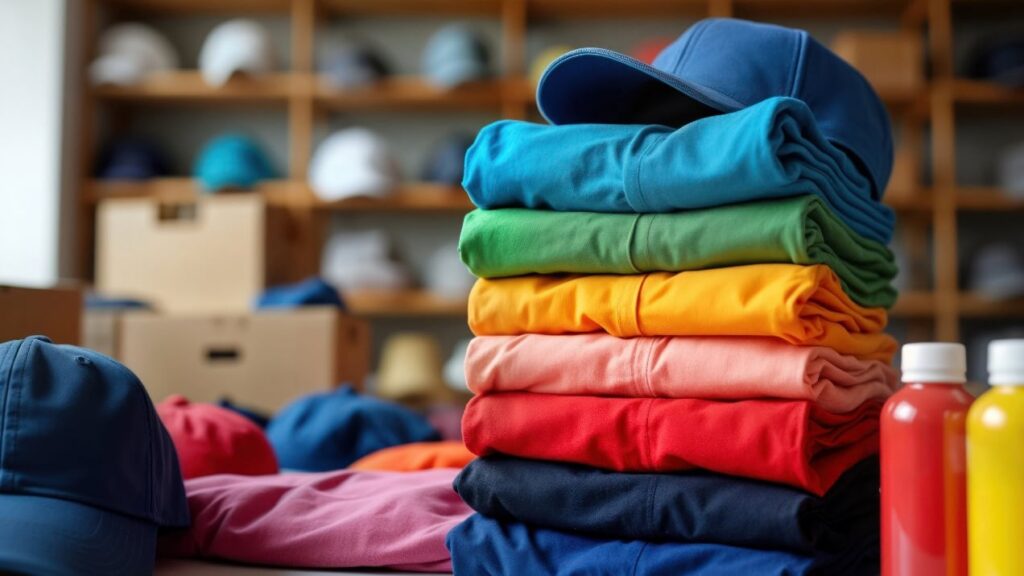
Most "eco-friendly" claims in promotional products are unverifiable. The certifications that actually mean something are FSC, GOTS, OEKO-TEX, GRS, and Fair Trade. Everything else deserves questions.
What "eco-friendly" actually means (and doesn't)
The phrase "eco-friendly" has no legal definition in Canada. A supplier can print it on a hang tag without proving a single claim. That does not make it a lie, but it does make it meaningless until backed by specifics. When a product is described as eco-friendly, the first question is: compared to what? A recycled polyester tote has a different environmental story than a bamboo pen, and both have a different story than ordering nothing at all.
The useful questions are concrete: what percentage is recycled, is the factory audited, and can the supplier name the certification body?
Recycled content versus recyclable: they are not the same thing
A product made from recycled content (post-consumer PET bottles turned into a tote bag, for example) has already diverted waste from a landfill. That is measurable. A product labelled "recyclable" may technically be recyclable under ideal conditions, but most promotional items end up in mixed waste where municipal programs do not sort them. A recyclable water bottle matters only if the recipient actually recycles it, and most of us know how that goes.
When we source products with recycled content, we look for a stated percentage and a credible supply chain. "Made from recycled materials" with no percentage is the kind of claim that sounds good in a catalogue and means very little in practice.
Certifications that carry weight
Not all certifications are created equal. Some represent rigorous, third-party audited standards. Others are self-declared or come from industry groups with low barriers. Here are the ones we consider meaningful:
- FSC (Forest Stewardship Council) for paper and wood products. The chain of custody is audited, and the logo means the fibre came from responsibly managed forests.
- Fair Trade Certified for products where labour conditions matter (apparel, cotton goods). This covers wages, working conditions, and community investment.
- GOTS (Global Organic Textile Standard) for organic cotton and textiles. It covers the full supply chain from raw fibre through manufacturing.
- OEKO-TEX Standard 100 for textiles tested for harmful substances. It does not address environmental impact directly, but it does confirm the product is safe for skin contact.
- GRS (Global Recycled Standard) for products with verified recycled content, with chain-of-custody tracking.
Labels that should prompt more questions: "eco," "green," "natural," "earth-friendly," or any leaf icon that is not tied to a named, auditable standard.
The bamboo problem
Bamboo is marketed as a miracle material: fast-growing, renewable, biodegradable. And as a raw plant, it is. But the bamboo in most promotional products has been processed into bamboo viscose or bamboo rayon through a chemical-intensive process that strips away most of the environmental advantage. The FTC in the United States has fined companies for labelling rayon made from bamboo as "bamboo fabric," and Canada's Competition Bureau takes a similar view on misleading claims.
Bamboo products are not inherently bad. Solid bamboo items (cutting boards, utensils) retain more of the plant's properties. But a "bamboo" travel mug that is actually bamboo-fibre composite with melamine resin is a different product entirely. Ask what the bamboo component actually is before you put it in a gift box labelled "sustainable."
"Biodegradable" plastic is not what you think
Most plastics labelled biodegradable require industrial composting facilities operating at specific temperatures for specific durations. Those facilities are rare in Canada. In a standard landfill, a biodegradable plastic pen takes roughly the same time to break down as a regular one. PLA (polylactic acid) products made from corn starch face the same problem: they compost beautifully in a controlled facility and persist for decades in a landfill.
If a client asks for biodegradable products, we explain this honestly. Some organizations have access to commercial composting through their waste management contracts, and for them, PLA products make sense. For most, the claim does not hold up once the product leaves the building.
Local decoration versus offshore production
A product decorated in Canada from blank goods already in-country has a different carbon footprint than one fully manufactured and decorated overseas, then air-freighted to meet a deadline. We decorate in our Kemptville facility using embroidery, screen printing, sublimation, and DTF heat transfer. The blank products still travel from factories around the world (transparency matters, so we will not pretend otherwise), but the decoration, quality control, and shipping happen here. That shortens the last leg, reduces the chance of reject-and-reship cycles, and keeps the work in the community.
For organizations tracking Scope 3 emissions, the origin of the blank product and the decoration location both matter. We can tell you where each component comes from. Not every supplier can.
The Fighting Against Forced Labour Act
Canada's Fighting Against Forced Labour and Child Labour in Supply Chains Act (Bill S-211) requires organizations above certain thresholds to report on the risks of forced or child labour in their supply chains. If you are subject to this act, the promotional products you order are part of that supply chain. We comply with Bill S-211 reporting requirements and can provide documentation on our sourcing practices. You can read more on our sustainability and ethical sourcing page.
The most sustainable promotional product
Here is the part most suppliers will not say: the most sustainable option is to order fewer, better items that people actually keep and use. A high-quality embroidered jacket worn for years has a lower per-use environmental impact than a hundred cheap pens that end up in a drawer within a week. The ROI math and the sustainability math point in the same direction.
When we consult on product selection, we will sometimes recommend a smaller quantity of a better product over a large run of something forgettable. That is not a sales tactic. It is the honest answer to "how do we make this program more sustainable?"
A practical filter for evaluating claims
Before you approve a "sustainable" product for your next order, run it through these questions:
- Is the sustainability claim tied to a named, third-party certification?
- Can the supplier state the percentage of recycled or organic content?
- Is "biodegradable" conditional on industrial composting you do not have access to?
- Is bamboo being used as a marketing term for chemically processed rayon?
- Does the supplier know (and will they share) where the product is manufactured?
- Will people actually keep and use this item, or will it end up in a landfill within a month?
Sustainability in promotional products is real, but it requires specifics, not slogans. At Ladybug Designs, we will tell you what we can document and what falls into marketing territory. We source certified products when they exist, decorate locally in our Kemptville facility, comply with Canada's forced-labour supply-chain legislation, and will always recommend fewer, better items over a large run of something nobody keeps. Our sustainability page covers our commitments in detail.